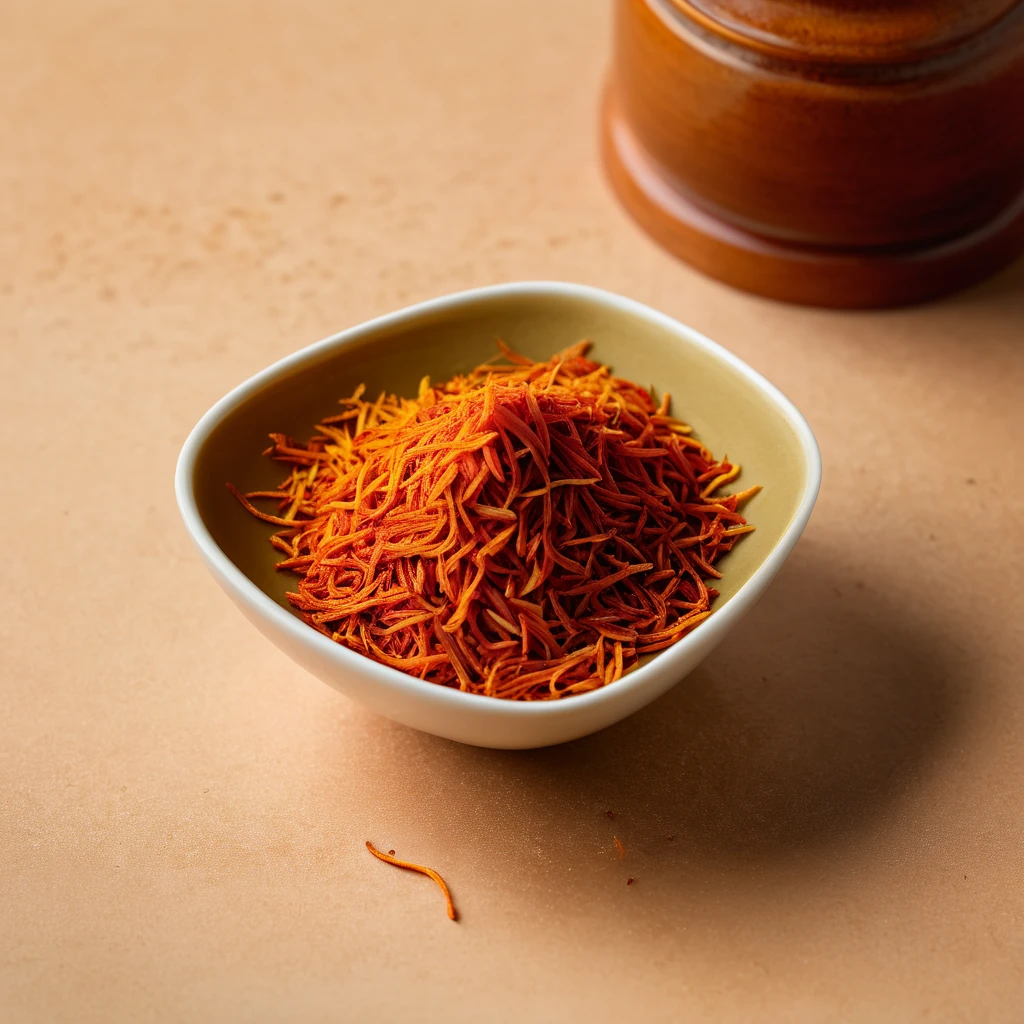
Saffron (Crocus sativus) holds the remarkable distinction of being the world’s most expensive spice — each thread is hand-harvested from a single flower’s stigma, requiring the work of 200,000 flowers to produce just one kilogram. In the UAE, Iran, and across the broader Arab world, saffron (za’faran — زعفران) is not merely a spice but a cultural luxury woven into traditional medicine, cuisine, hospitality, and celebration for thousands of years.
And modern science is discovering that saffron may be one of the most medicinally active spices in the world — with clinical evidence for benefits that span mental health, vision, sexual function, and anti-cancer properties.
The Active Compounds
Saffron’s therapeutic properties come from three primary bioactive compounds unique to the saffron crocus:
- Crocin and crocetin: Carotenoid pigments responsible for saffron’s brilliant golden color and its antioxidant, neuroprotective, and anti-cancer properties
- Safranal: The aromatic compound responsible for saffron’s distinctive fragrance — with demonstrated antidepressant and anxiolytic effects
- Picrocrocin: The compound responsible for saffron’s slightly bitter taste — with additional antioxidant properties
Science-Backed Benefits
Depression and Mood Disorders
This is saffron’s most consistently validated therapeutic application. A remarkable series of randomized controlled trials — including several published in prestigious peer-reviewed journals — have found that saffron extract (30mg/day) produces antidepressant effects comparable to prescription antidepressants (fluoxetine and imipramine) in people with mild to moderate depression, with significantly fewer side effects. A comprehensive meta-analysis confirmed saffron’s statistically significant superiority over placebo for depression outcomes. The mechanism appears to involve serotonin reuptake inhibition — similar to SSRI antidepressants — mediated by safranal and crocin.
Age-Related Macular Degeneration (AMD)
In one of the most compelling applications of any spice in clinical medicine, saffron supplementation has been shown in multiple clinical trials to improve visual function in patients with early-stage age-related macular degeneration — one of the leading causes of vision loss worldwide. Research from the Australian National University found that just 20mg of saffron daily produced measurable improvements in retinal cell function. The crocin and crocetin in saffron protect photoreceptor cells from oxidative damage, and their mechanism of action in AMD is well-established.
Cognitive Function and Alzheimer’s
Clinical trials have found saffron extract (30mg/day) comparable to donepezil (a standard Alzheimer’s medication) for improving cognitive symptoms in mild to moderate Alzheimer’s disease over 22 weeks. The neuroprotective properties of crocin and crocetin protect brain cells from oxidative stress, tau protein aggregation, and amyloid plaque formation — key pathological processes in Alzheimer’s disease. Saffron supplementation has also been studied for age-related cognitive decline in healthy older adults, with promising results.
Anxiety and Stress
Multiple studies have found saffron effective for reducing anxiety symptoms — with safranal demonstrating GABA-modulating activity similar to anxiolytic medications. Saffron has also shown effectiveness for premenstrual syndrome (PMS), including mood symptoms, anxiety, and irritability associated with the menstrual cycle. A clinical trial found 30mg of saffron extract daily significantly reduced PMS symptom severity compared to placebo.
Sexual Function
Saffron has a long history as an aphrodisiac in Persian and Arab traditional medicine — and clinical research provides partial support for this reputation. Studies have found saffron supplementation improved sexual function in men with erectile dysfunction and also reduced sexual dysfunction in women taking antidepressant medications (which commonly cause this side effect). The mechanism may involve enhanced circulation and nitric oxide production.
Saffron in UAE and Arab Culture
Saffron holds an extraordinarily elevated status in Gulf culture. Emirati and Gulf cuisine uses saffron extensively — in the prized saffron-infused rice dish machboos, in traditional spiced coffee (qahwa), in luxurious desserts like saffron halwa, and in traditional medicine preparations. Iranian saffron — produced primarily in the Khorasan region — is the world’s finest and most widely traded, with the UAE being one of the world’s major saffron import and re-export hubs. The cultural resonance of saffron in the UAE makes it one of the most beloved and prestigious products BTNaturals can offer.
How to Use Saffron
- Golden milk/tea: Steep 5–10 threads in 1 tablespoon of hot water for 15 minutes, then add to warm milk with honey for a soothing, mood-supporting drink.
- Cooking: Bloom saffron threads in warm water or stock before adding to rice, soups, and stews. A little goes a long way — 10–20 threads are typically sufficient for a dish serving 4–6.
- Supplements: For clinical benefits (depression, mood, vision), standardized saffron extracts at 30mg/day are typically used. Look for extracts standardized to safranal and crocin content.
Safety and Authenticity
At therapeutic doses (30mg extract/day or small culinary amounts), saffron is very safe. Extremely high doses (5g+) can be toxic — but this is far beyond any culinary or supplemental use. The saffron market is heavily adulterated — common adulterants include safflower, marigold petals, corn silk, and paper dyed with synthetic colors. Authentic saffron should be sourced from reputable suppliers with proof of origin, tested for ISO 3632 quality standards (which measure safranal and crocin content).
Saffron is genuinely one of nature’s most remarkable healing spices — its therapeutic potential spanning mental health, vision, cognition, and beyond is extraordinary and increasingly well-supported by rigorous science. Explore BTNaturals’ premium saffron products — authentic, tested, and worthy of their golden reputation.