
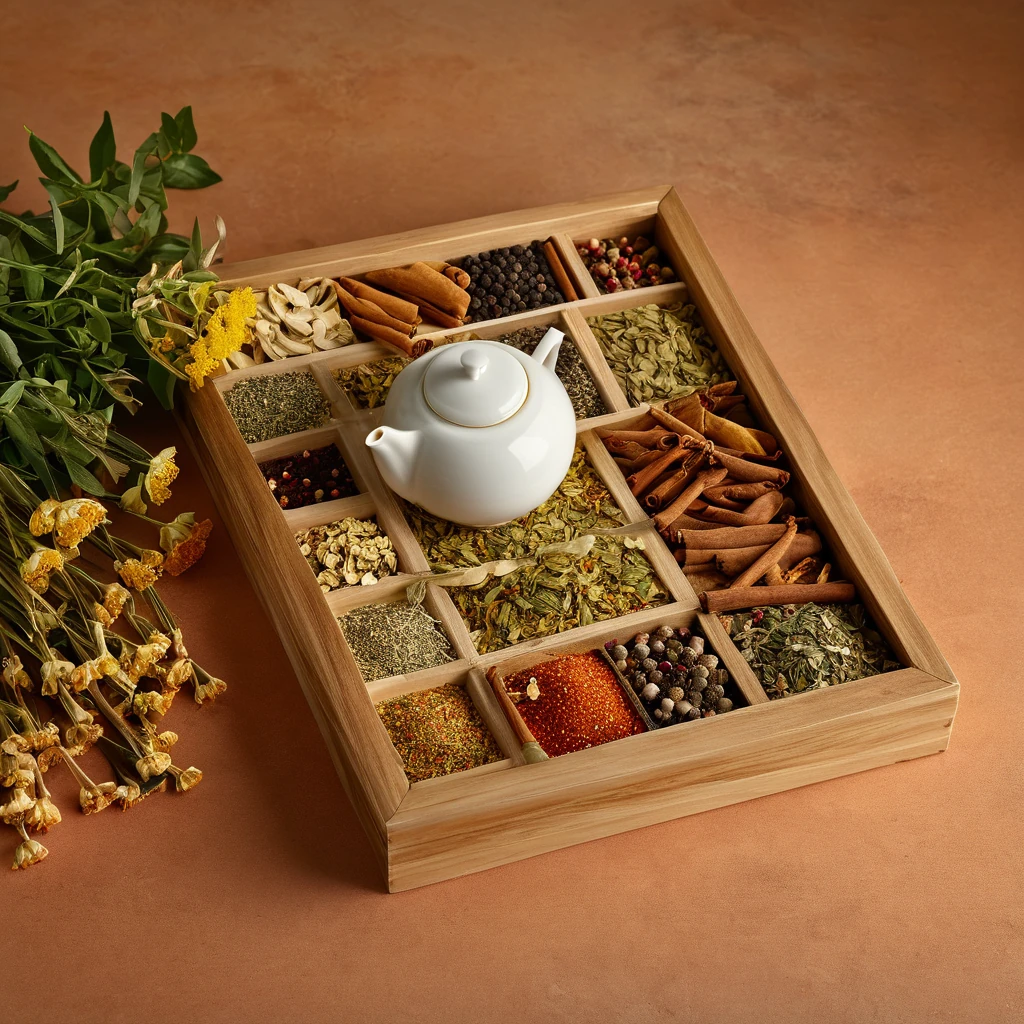
The Tradition of Arabic Herbal Tea
In Arabic culture, tea is far more than a drink — it is a symbol of hospitality, a vehicle for healing, and a moment of connection. From the rose-scented teas of Morocco to the sage and thyme infusions of the Levant, each region has its own treasured herbal traditions. These teas were the original medicine of the Arab world, passed down through generations of healers, mothers, and grandmothers.
Classic Arabic Herbal Tea Recipes
1. Zaatar Tea (شاي الزعتر)
Thyme tea is widely drunk across the Levant for its powerful antibacterial and respiratory benefits. Steep 1 tsp dried thyme in boiling water for 5 minutes. Add honey and lemon. Drink at the first sign of a cold or as a morning immunity booster.
2. Maryamiya Tea (شاي المريمية)
Sage tea is beloved in Palestinian and Jordanian tradition. It relieves sore throats, supports women’s hormonal health, and improves memory. Steep 2–3 fresh or dried sage leaves in boiling water for 4 minutes. Add a generous teaspoon of honey.
3. Karkade (شاي الكركديه)
Hibiscus flower tea — known as karkade in Egypt and Sudan — is drunk hot in winter and iced in summer. It’s tart, refreshing, and packed with Vitamin C. Steep 2 tbsp dried hibiscus petals in boiling water for 8 minutes. Sweeten with sugar or honey. Add a slice of lemon. Serve hot or over ice.
4. Yansoon Tea (شاي اليانسون)
Anise seed tea is the traditional remedy for digestive issues, colic in babies, and respiratory infections. Boil 1 tsp anise seeds in 2 cups water for 10 minutes. Strain and add honey. Drink after meals for best results.
5. Chamomile & Honey Blend (أقحوان بالعسل)
The simplest and most universally loved herbal tea. Steep a generous handful of chamomile flowers in hot water for 7 minutes. Add a tablespoon of raw honey — ideally our Sidr Honey for maximum benefit. Drink before bed for deep, restful sleep.
Tips for Perfect Herbal Tea
Always use filtered water heated to just below boiling (not rolling boil) for delicate flowers. Cover your cup or teapot while steeping to trap volatile aromatic oils. Use fresh or recently dried herbs for maximum flavor and potency. Store dried herbs in airtight containers away from light and heat.