
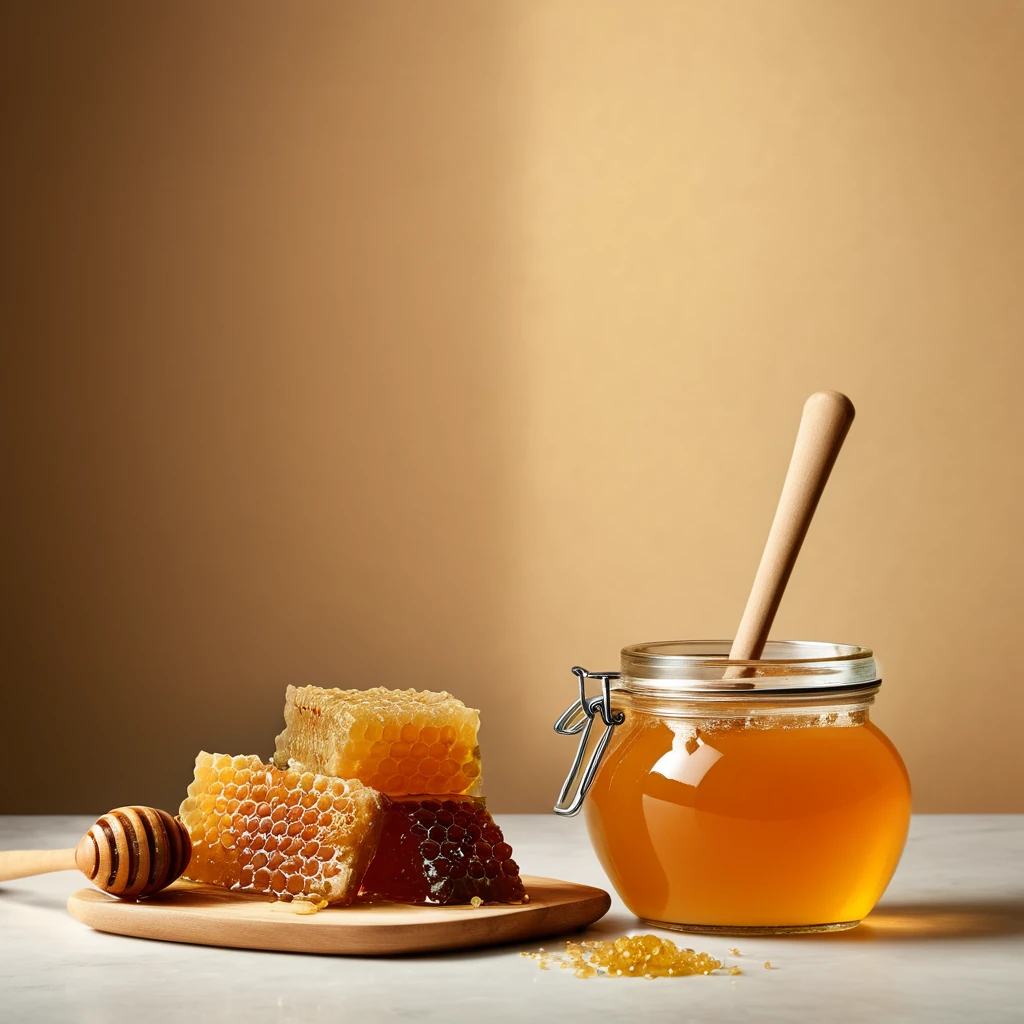
Raw Honey: 8,000 Years of Healing in a Jar
Human beings have been harvesting and using honey for at least 8,000 years — cave paintings in Spain show ancient people collecting honey from wild beehives. Ancient Egyptians used honey in over 900 recorded remedies. Honey appears in ancient Greek, Roman, Ayurvedic, and Islamic medical texts as one of the most universally revered healing substances in human history. And modern science has confirmed that this ancient reverence was justified.
Raw honey — honey that has not been heated, filtered, or processed — is one of the most biologically complex food substances known. It contains over 300 distinct compounds including enzymes, amino acids, minerals, vitamins, antioxidant polyphenols, and unique antimicrobial compounds that have fascinated researchers for decades.
What’s in Raw Honey?
- Hydrogen peroxide: Produced enzymatically by glucose oxidase — responsible for honey’s primary antimicrobial mechanism in many varieties
- Methylglyoxal (MGO): Particularly high in Manuka honey — a powerful antimicrobial compound effective even against antibiotic-resistant bacteria
- Defensin-1 (bee defensin): An antimicrobial protein added by bees during honey production
- Polyphenols and flavonoids: Including caffeic acid, ferulic acid, quercetin, and many others — powerful antioxidants varying by the flowers bees visit
- Enzymes: Diastase, invertase, and glucose oxidase providing digestive and antimicrobial activity
- Minerals: Potassium, calcium, magnesium, zinc, iron, copper — amounts vary with honey type
- Low moisture content and low pH: Physical properties that inhibit microbial growth
Science-Backed Raw Honey Benefits
1. Wound Healing and Antimicrobial Activity
This is one of honey’s most evidence-backed applications. Medical-grade honey — particularly Manuka honey from New Zealand — is used clinically for wound management in hospitals worldwide. Research confirms that honey effectively treats infected wounds, burns, and ulcers by creating a moist wound environment, delivering antimicrobial activity, reducing inflammation, and promoting tissue regeneration. Notably, honey has demonstrated activity against antibiotic-resistant bacteria including MRSA (Methicillin-resistant Staphylococcus aureus), making it a subject of intense pharmaceutical research.
2. Cough Suppression
Several clinical trials have found that honey is as effective as or superior to over-the-counter cough medications for reducing cough frequency and severity, particularly in children. A tablespoon of raw honey before bed has been shown to improve sleep quality in children with nighttime cough from upper respiratory infections. The World Health Organization (WHO) recommends honey as a cough remedy in its guidelines for childhood respiratory illness management.
3. Antioxidant Protection
The darker the honey, the higher its antioxidant content. Dark honeys like buckwheat honey, Sidr honey, and Manuka honey contain extraordinarily high polyphenol concentrations. Regular consumption of high-quality, dark raw honey provides meaningful dietary antioxidant support that helps protect against oxidative stress and chronic disease risk.
4. Digestive Health and Prebiotic Effects
Raw honey contains oligosaccharides that function as prebiotics — compounds that feed beneficial gut bacteria including Lactobacillus and Bifidobacterium species. Studies have confirmed that honey consumption supports gut microbiome diversity. Honey is also traditionally and clinically used for gastric ulcer management — research suggests honey may help protect the stomach lining and support healing of H. pylori–related ulcers when used alongside conventional treatment.
5. Skin and Beauty Applications
Raw honey is one of the most time-honored beauty ingredients in the world. Modern dermatological research confirms its effectiveness for:
- Moisturization: Honey is hygroscopic (attracts moisture from the environment) — making it an excellent natural humectant for skin
- Acne treatment: Antimicrobial activity reduces acne-causing bacteria; anti-inflammatory properties reduce redness and swelling
- Atopic dermatitis (eczema): Medical honey preparations have shown effectiveness comparable to topical corticosteroids in some studies
- Hair conditioning: Honey masks moisturize and add shine to hair
- Lip care: Natural humectant and antimicrobial properties make honey an effective lip treatment
6. Sleep and Relaxation
A teaspoon of raw honey before bed is a traditional remedy for improving sleep quality. The natural sugars in honey cause a controlled insulin release, which allows tryptophan (an amino acid) to cross into the brain more easily — where it converts to serotonin and then melatonin, supporting restful sleep. This is one of the oldest and gentlest natural sleep aids available.
Premium Honey Varieties Worth Knowing
Sidr Honey
Produced from the nectar of the Sidr tree (Ziziphus spina-christi) — a tree mentioned in the Holy Quran and found across Yemen, Saudi Arabia, and the UAE — Sidr honey is considered the most premium honey in the Arab world. It commands premium prices due to its dark amber color, complex flavor, extraordinarily high antioxidant content, and strong antimicrobial activity. Yemeni Sidr honey in particular is renowned as a healing and wellness food in Islamic tradition.
Manuka Honey
Produced in New Zealand and Australia from the Manuka tree (Leptospermum scoparium), Manuka honey has the highest levels of methylglyoxal (MGO) of any honey — the compound responsible for its exceptional antibacterial potency against resistant bacteria. Used clinically as a wound treatment and sold in MGO or UMF (Unique Manuka Factor) rating systems to indicate potency.
Raw Wildflower Honey
Honey from diverse wildflower sources contains the richest diversity of polyphenols and enzymes, reflecting the biodiversity of the ecosystem the bees inhabit. Raw, unfiltered wildflower honey retains bee pollen, propolis, beeswax fragments, and the full enzyme profile — offering the most complete spectrum of honey’s health benefits.
Raw vs. Commercial Honey: Why It Matters
Most supermarket honey has been pasteurized (heated to 70°C+) and ultra-filtered — processes designed to prevent crystallization, extend shelf life, and create a clear appearance. Unfortunately, these processes destroy the enzymes, significantly reduce polyphenols, eliminate bee pollen, and reduce much of the antimicrobial activity that makes honey therapeutically valuable. For health purposes, always seek:
- Raw (unpasteurized) — never heated above 40°C (hive temperature)
- Unfiltered or minimally filtered — retains bee pollen and natural turbidity
- Traceable single-source — from specific geographical regions for consistent quality
- Certified organic where possible
Safety Notes
- Never give honey to infants under 12 months — honey may contain spores of Clostridium botulinum that can cause infant botulism, a potentially fatal condition in babies whose digestive systems are not yet mature enough to handle them. After 12 months, honey is safe.
- Honey is a significant source of natural sugars — people with diabetes should use it mindfully and discuss with their healthcare provider.
- Those with bee or pollen allergies should exercise caution, particularly with raw unfiltered honey containing bee pollen.
The Bottom Line
Raw honey is one of nature’s most extraordinary foods — a complex, biologically active substance with thousands of years of medicinal use and an impressive body of modern scientific validation. From wound healing and cough suppression to gut health and skin care, honey earns its reputation as a true superfood. Explore BTNaturals’ collection of premium raw honeys — including prized Sidr honey and Manuka honey — and experience the difference that genuine, unprocessed quality makes.
For further reading on raw honey, visit the raw honey overview on Wikipedia.